
In a landscape of rapid transformation, installing EV chargers at Saudi bank branches is no longer a luxury or a passing marketing initiative — it has become a strategic decision driven by the requirements of Vision 2030, environmental, social, and governance (ESG) standards, and the desire to attract a growing segment of customers who drive electric vehicles.
Riyad Bank, Bank Albilad, and Arab National Bank (ANB) are among the first Saudi financial institutions to equip their branches with EV chargers, in partnership with Climatech Charger. In this article, we examine the real drivers behind this trend, the expected return on investment, and the lessons learned from hands-on implementation.
The Shift Toward Electric Mobility in Saudi Arabia
Vision 2030 targets electric vehicles to make up around 30% of the total vehicle fleet in major cities by 2030. To achieve this ambitious goal, the government has launched several initiatives, including easing EV imports, exempting them from customs duties, and setting mandatory charging infrastructure standards for new buildings.
The number of EVs registered in the Kingdom is doubling year over year, with new registrations exceeding tens of thousands in 2025 alone. This accelerating growth means that charging infrastructure must expand at the same pace — or faster — and this is precisely where the private sector, led by the banks, plays a critical role in closing the gap.
Why Banks Specifically? The Strategic Advantages of Installing Chargers at Branches
1. Increased Customer Dwell Time and Cross-Selling Opportunities
When a customer knows their vehicle is charging while they are inside the branch, they tend to stay longer. Field studies show that the presence of an EV charger increases average customer dwell time by between 20% and 40%. These extra minutes give bank staff the opportunity to introduce personal financing offers, credit cards, and wealth management services — raising the revenue generated per visit.
2. Attracting High-Income Customers
EV owners in the Kingdom today predominantly come from the high-income and upper-middle-income brackets. These are the most attractive customers for banks in terms of deposit volumes and investment portfolios. Offering free or subsidized charging is a genuine differentiator that helps attract and retain this segment.
3. Strengthening ESG and Sustainability Ratings
Environmental, Social, and Governance (ESG) criteria have become an integral part of evaluating financial institutions, both globally and domestically. The Saudi Central Bank (SAMA) is placing increasing emphasis on sustainability practices among licensed banks. Installing EV chargers directly contributes to reducing the carbon footprint associated with bank operations and strengthens their annual sustainability reports.
Fact: According to published sustainability reports, several major Saudi banks have allocated budgets exceeding tens of millions of riyals for carbon-neutrality initiatives by 2030, and installing EV chargers is one of the most prominent of these initiatives in terms of visible impact and measurability.
4. Alignment with Vision 2030 and National Responsibility
As major national institutions, Saudi banks share a responsibility to support the economic and environmental transformations the country has committed to. Their contribution to expanding charging infrastructure aligns with the goals of the National Transport Strategy and the Saudi Green Initiative, reinforcing their image as active participants in the sustainable development agenda.
Case Study: Climatech Charger's Experience with Saudi Banks
Riyad Bank: More Than 21 Branches Equipped with Chargers
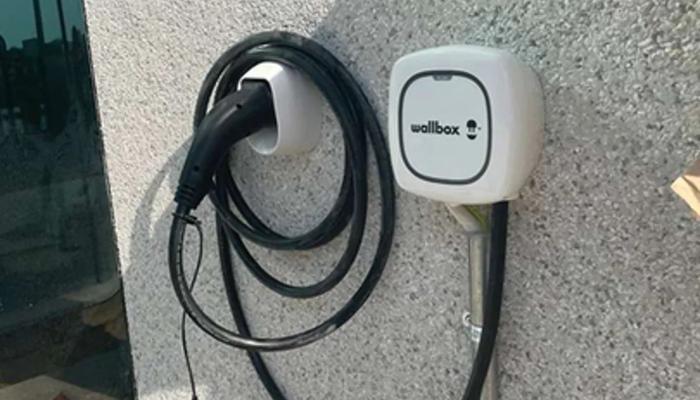
Riyad Bank is one of the first Saudi banks to adopt EV charger installation on a large scale. Climatech Charger installed chargers at more than 21 branches distributed across several cities in the Kingdom. The project included 7 kW and 22 kW AC chargers, specifically sized to match typical customer wait times of 30 minutes to one hour.
The implementation involved a detailed site survey of each branch to identify the optimal charger location, assess the existing electrical infrastructure, install dedicated protection breakers, and connect the chargers to a central charge point management system (CPMS) that enables the bank to monitor usage and generate reports.
Bank Albilad: 12 Branches and an Expansion Roadmap
Climatech Charger installed EV chargers at 12 branches of Bank Albilad. The project focused on high-traffic branches with larger parking areas, taking into account ease of access and clear customer wayfinding. The bank is currently working on expanding the project to cover additional branches in new regions.
Arab National Bank (ANB): A Data-Smart Rollout
Arab National Bank chose a phased approach, starting by equipping selected branches in Riyadh and Jeddah and analyzing usage data before scaling up. This data-driven approach enabled the bank to refine charger site selection and determine the appropriate power rating for each branch based on visitor volume and the concentration of EV owners in the surrounding area.
Return on Investment: Numbers and Analysis
Many decision-makers in the banking sector question the economic feasibility of installing EV chargers. Below is a simplified analysis of costs and returns:
The real return, however, is not limited to direct charging revenue. The indirect benefits must also be factored in:
- Higher customer satisfaction: charging services enhance the customer experience and boost loyalty and retention rates.
- Free media coverage: sustainability initiatives attract extensive media attention, reinforcing brand awareness.
- Improved credit and sustainability ratings: international rating agencies factor ESG criteria into their assessment of financial institutions.
- Attracting investors: responsible investment funds favor companies with a clear commitment to sustainability.
Challenges Banks Faced and How They Overcame Them
Existing Electrical Infrastructure
Many bank branches were built before the EV era, and their electrical infrastructure was therefore not designed to handle additional charging loads. Climatech Charger addressed this challenge by conducting thorough electrical surveys at each branch and offering solutions ranging from upgrading electrical panels to installing smart load balancing systems that prevent overloading the grid.
Parking Management
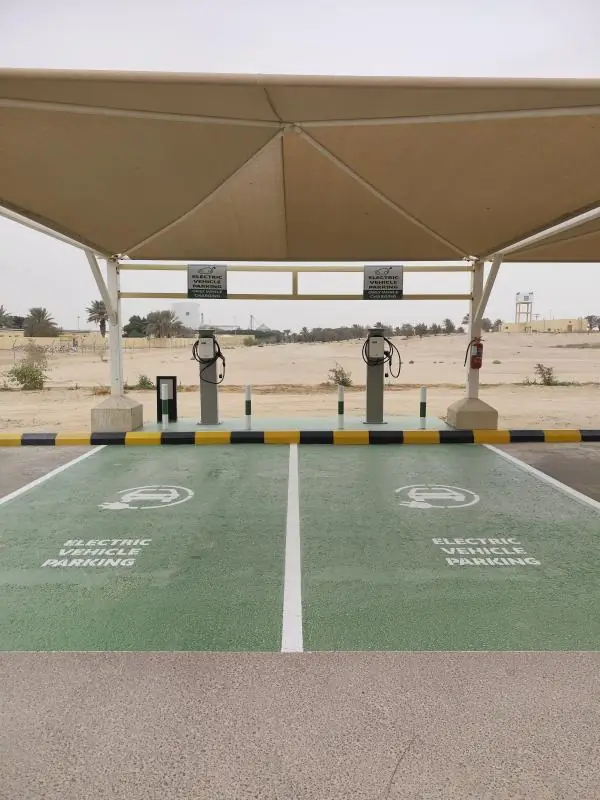
Banks designated dedicated EV charging parking bays with clear signage. To deter non-EVs from blocking charger bays, some branches deployed CCTV monitoring and automated barriers that open only via the charging app.
Staff Training
Climatech Charger provided concise training programs for branch staff covering frequently asked charging questions from customers, procedures for handling minor faults, and how to guide customers through using the charger and charging app.
Climatech Charger's Integrated Solutions for Banks
Climatech Charger's services go beyond simply selling and installing chargers — we offer a complete ecosystem that includes:
- Consultation and design: site assessment and determination of the right number of chargers and power ratings based on customer traffic analysis.
- Supply and installation: supplying chargers from approved global brands and installing them in accordance with Saudi and international standards.
- Charge Point Management System (CPMS): a digital platform that allows the bank to monitor all chargers remotely, track usage, generate energy reports, and manage access and payments.
- Maintenance and technical support: scheduled maintenance contracts with rapid fault response, genuine spare parts, and proactive remote monitoring.
- Phased expansion: flexible expansion plans that allow new chargers to be added seamlessly as demand grows.
The Future of EV Chargers in the Saudi Banking Sector
2026 and beyond are expected to see a marked acceleration in Saudi banks' adoption of EV chargers, driven by several factors:
- Tighter sustainability disclosure requirements from the Saudi Central Bank and the Capital Market Authority.
- Rapid growth in the number of EVs registered in the Kingdom.
- Charger costs continuing to decline and technology improving year over year.
- Competition among banks to deliver a superior, differentiated customer experience.
- The potential to turn chargers into an additional revenue stream through paid charging apps.
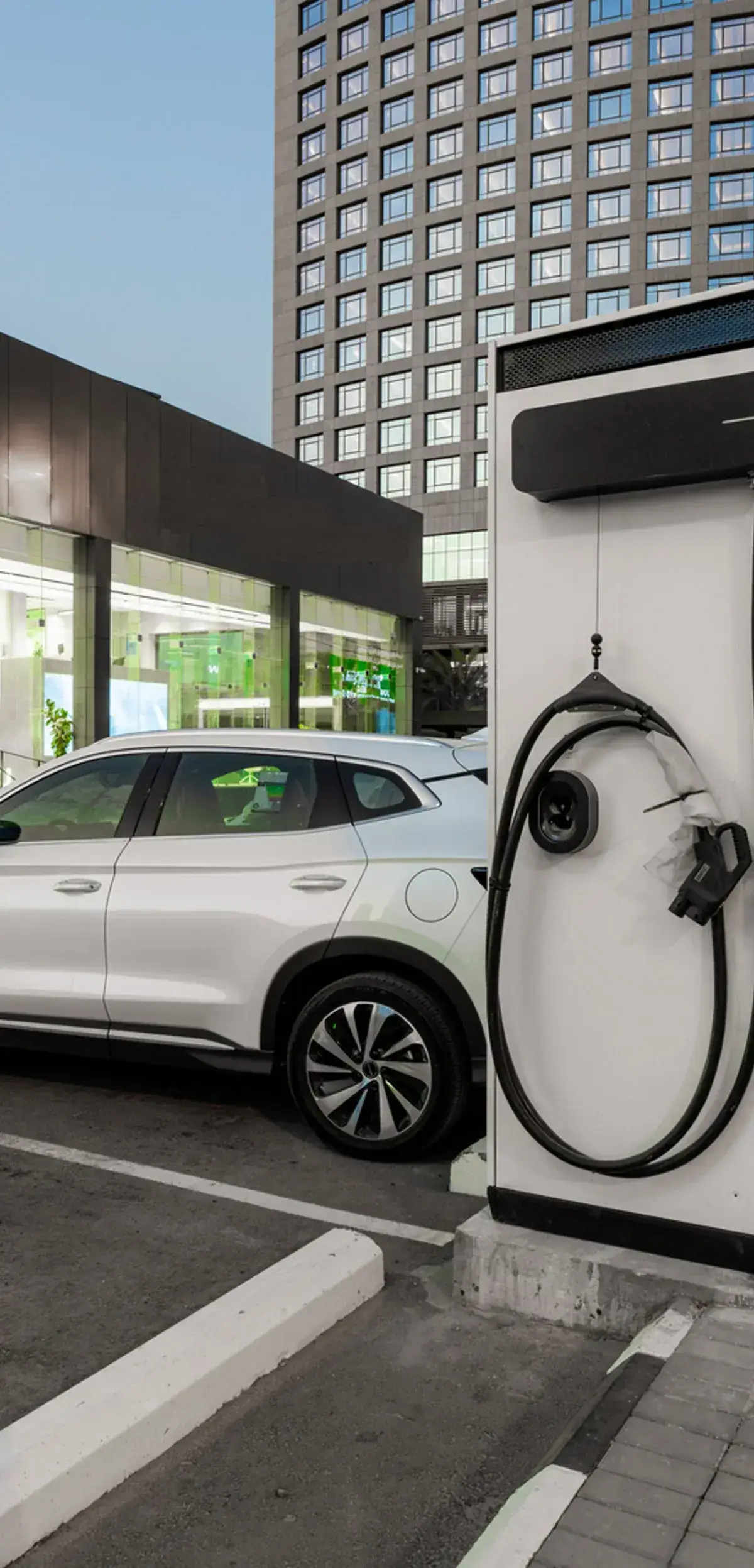
We also expect banks to expand into DC fast chargers with capacities ranging from 50 kW to 120 kW at their flagship branches and headquarters, serving customers who need rapid top-ups during short visits.
Our recommendation to banks: don't wait until charger installation becomes mandatory. Banks that move now will secure a first-mover advantage and build a sustainability reputation early, while latecomers will be forced to catch up under regulatory and competitive pressure.
Advice for Banks Planning to Install Chargers at Their Branches
- Start with high-traffic branches: pick the branches that receive the largest daily footfall to maximize impact and utilization.
- Choose a specialized partner: work with a company that has a proven track record of installing commercial and banking-sector chargers — not just a hardware reseller.
- Think in terms of the full ecosystem: don't just buy a charger; make sure you also have a CPMS management system, a maintenance contract, and ongoing technical support.
- Measure impact and analyze the data: track utilization rates and customer satisfaction so expansion decisions are grounded in real data.
- Promote the service: let your customers know chargers are available at the branch through the mobile banking app, SMS messages, and in-branch signage.
Do you operate bank branches or commercial sites and are thinking about installing EV chargers?
The Climatech Charger team has delivered EV charger projects across the banking and commercial sectors at dozens of sites. We'll provide you with a free feasibility study and a comprehensive quote covering supply, installation, maintenance, and the management system.