
Already bought an electric vehicle or thinking about getting one? Great. But the most important decision after choosing the car itself is choosing the right EV charger. The wrong charger means painfully slow charging that wastes your time, frequent malfunctions, or even complete incompatibility with your vehicle.
Many new EV owners rely on the charger that comes with the car or buy any charger online without understanding the differences between types. The result? Frustration and unnecessary costs.
In this comprehensive guide, we explain everything you need to know to choose the right charger on your first try -- from charger types and their capabilities, to compatibility with your car, and the mistakes you need to avoid.
Types of EV Chargers
Before you pick a charger, you need to understand the basic types available on the market. EV chargers are divided into three main levels, each with its own use case, speed, and cost.
Level 1 -- Slow Charging
This charger runs on standard household electricity (220V in Saudi Arabia) and delivers a low output between 1.4 and 2.3 kW. It is typically the portable charger that comes with the car. It is suitable for emergency use only, as a full charge can take 20 to 40 hours depending on the battery size.
Level 2 -- Home and Commercial Charging
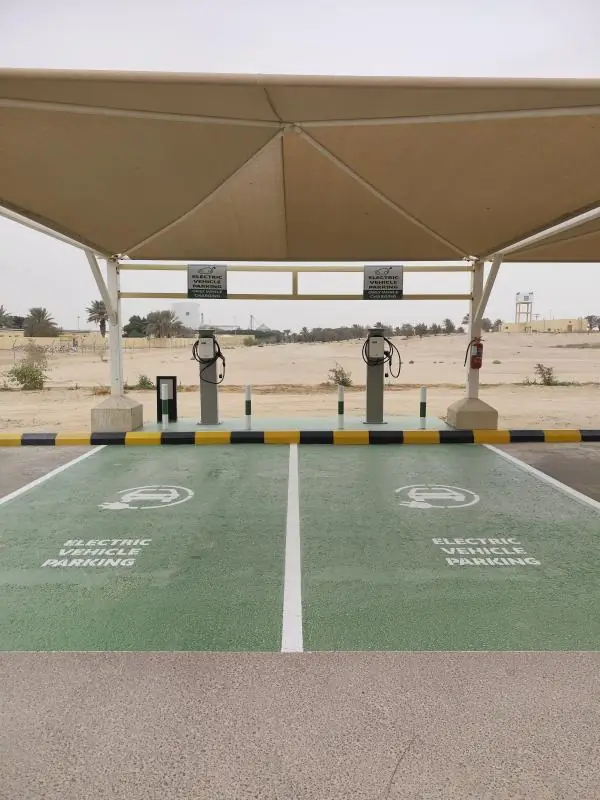
This is the best option for daily use. It runs on alternating current (AC) with an output between 7 kW and 22 kW. It requires a dedicated electrical circuit (usually 32 amps or more) and fully charges your car in 3 to 8 hours. Ideal for homes, offices, hotels, and shopping mall parking.
Level 3 -- DC Fast Charging
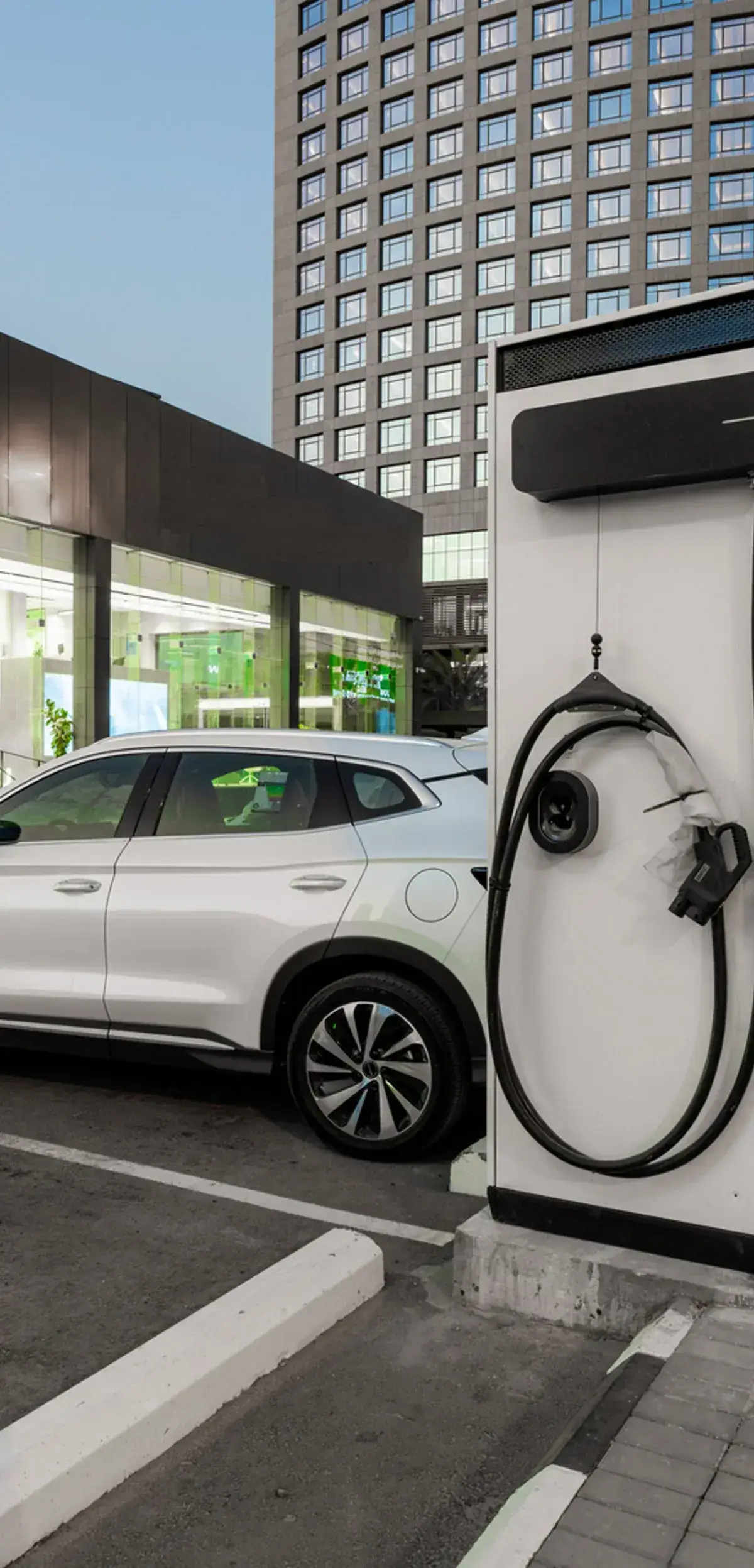
Direct current (DC) chargers are the fastest type available. Their output starts at 50 kW and goes up to 360 kW and beyond. They can charge your car from 10% to 80% in 20 to 45 minutes. However, they are very expensive and require specialized infrastructure, so you typically find them at gas stations, highways, and large commercial locations.
How to Determine Which Charger Fits Your Car
Choosing a charger is not just about price or appearance. There are three key factors you must determine before purchasing any charger.
1. Check the Connector Type
This is the most important step. If you buy a charger with a connector that is incompatible with your car, you simply won't be able to use it. In Saudi Arabia and the region, the common types are:
- Type 2 (Mennekes): The European standard and the most widely used in Saudi Arabia. Used by most European and Asian vehicles such as BMW, Mercedes, BYD, and Hyundai. It supports AC charging at 7 to 22 kW.
- CCS2 (Combined Charging System): The same Type 2 connector but with additional DC pins at the bottom. It supports DC fast charging and is the approved standard for fast charging in Saudi Arabia.
- CHAdeMO: An older Japanese standard used by some Nissan and Mitsubishi models. It has become less common as most manufacturers have switched to CCS2.
- Tesla (NACS): Tesla vehicles in North America use a proprietary connector, but in Saudi Arabia and the European market, they come with CCS2 directly.
Tip: Check your car's manual or visit the manufacturer's website to confirm the exact connector type. Most EVs sold in Saudi Arabia support Type 2 for standard charging and CCS2 for fast charging.
2. Determine Your Daily Charging Needs
Not everyone needs the same charging capacity. It depends on how many kilometers you drive daily:
- Less than 50 km per day: A 7 kW charger is more than enough. Plug it in at night and wake up to a fully charged car.
- 50 to 100 km per day: A 7 kW charger works, but an 11 kW charger gives you more comfort and faster charging.
- More than 100 km per day: Consider an 11 or 22 kW charger depending on your car's on-board charger capacity.
The simple rule: every 1 kW of charger output adds approximately 5-6 km of range per hour of charging. So a 7 kW charger adds about 35-40 km per hour.
3. Choose the Right Output (7kW vs 11kW vs 22kW)
This is the most common question. Let us break it down:
- 7 kW (Single Phase): The most popular option for homes in Saudi Arabia. Requires a 32-amp single-phase connection. Sufficient for most users who charge overnight. Lower installation cost.
- 11 kW (Three Phase): Requires a three-phase connection in the electrical panel. 50% faster than the 7 kW charger. Ideal for those with more than one car or who drive long distances daily.
- 22 kW (Three Phase): The fastest AC charger available. But be aware -- many cars' on-board chargers only support 7 or 11 kW. Even if you install a 22 kW charger, the car won't charge faster than its maximum capacity. This option is better suited for commercial locations that serve different vehicles.
Important: The actual charging speed is determined by the lower value between the wall charger's output and the car's on-board charger capacity. For example, if your wall charger is 22 kW but your car only supports 7 kW, charging will happen at 7 kW.
Best Chargers Available in Saudi Arabia
The Saudi market features several trusted EV charger brands. Here are the most notable ones:
- Schneider Electric: One of the world's largest electrical solutions companies. Their chargers are known for high quality and durability. Excellent for both home and commercial use. Available in 7, 11, and 22 kW capacities.
- ABB: A leading Swiss company offering high-spec AC and DC chargers. ABB's DC fast chargers are among the top choices for commercial and public charging stations.
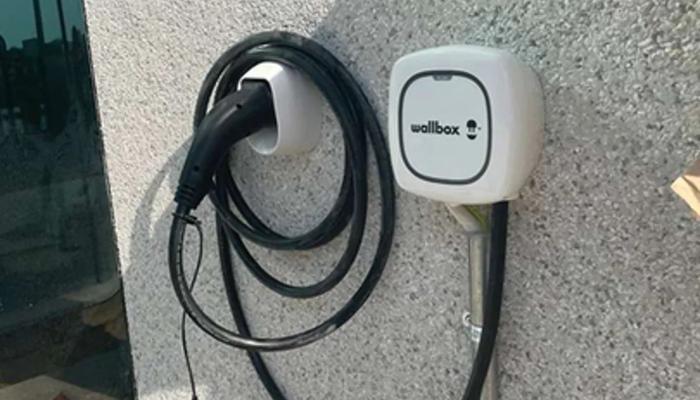
- Wallbox: A Spanish company specializing in smart home chargers. Known for sleek design and a smart app for remote charging control. Great for premium home installations.
- EVBox: A Dutch company providing comprehensive charging solutions. Features an advanced Charge Point Management System (CPMS) ideal for businesses and complexes managing multiple charging points.
The choice between these brands depends on your needs: do you want a simple home charger, or a fully integrated commercial solution with management and billing capabilities? A specialist can help you choose the best option based on your location and budget.
Home Charger vs. Commercial Charger
The difference between home and commercial chargers is not just about output -- there are fundamental differences in features and cost:
If you are a homeowner with one or two EVs, a home charger with 7 or 11 kW output is the ideal solution. If you own a commercial property or a business and want to offer charging services to your customers or employees, you need a commercial solution with a charge point management system.
5 Common Mistakes When Choosing a Charger
From our experience installing over 1,000 charging points across Saudi Arabia, these are the most common mistakes we see:
Buying a charger with the wrong connector: Some people buy a charger from Amazon or AliExpress without verifying compatibility with their car. The wrong connector means a useless charger and wasted money.
Choosing a lower output than needed: A 3.5 kW charger may be cheaper, but it takes twice as long to charge. Invest in at least a 7 kW charger -- the price difference is small but the performance difference is huge.
Ignoring smart features: Smart chargers let you schedule charging (for example, charging at night during off-peak hours), monitor energy consumption, and receive remote security updates. A charger without Wi-Fi or Bluetooth is an outdated choice.
Not accounting for installation costs: The charger price is only part of the total cost. Electrical wiring, a dedicated breaker, cables, and installation labor can add 30% to 50% on top of the charger price. Request a comprehensive quote before you decide.
Hiring a non-specialized electrician: Installing an EV charger is not like installing an air conditioner or water heater. It requires a specialized technician who understands charging systems and electrical safety. Improper installation can damage the charger, harm the car's battery, or even void the vehicle's warranty.
Our advice: Do not buy a charger online without consulting a professional first. Contact a specialist who can inspect your electrical setup and recommend the right charger for your car and infrastructure. Improper installation causes malfunctions and may void your car's warranty. A few minutes of consultation can save you thousands of riyals.
Need Help Choosing the Right Charger?
Our team provides free consultations and helps you pick the best charger for your car and budget. We inspect your electrical setup and provide a comprehensive, no-obligation quote.