The electric vehicle sector in Saudi Arabia is experiencing rapid growth, driven by the goals of Vision 2030 and the global shift toward environmental sustainability. As the number of EVs on Saudi roads continues to rise, there is a growing need for integrated charging infrastructure, particularly at locations where people spend extended periods of time, such as shopping malls and commercial complexes.
For commercial mall owners and real estate developers, installing EV charging stations is not merely an additional service, it is a genuine investment opportunity that combines direct revenue generation with enhanced mall appeal and increased customer dwell time and spending.
In this article, we take a detailed look at why commercial malls should install charging stations, the revenue models available, how to calculate return on investment, and the practical steps for implementation.
Why Should Commercial Malls Install Charging Stations?
There are several reasons why installing charging stations is a smart strategic decision for any commercial mall in the Kingdom:
1. Attracting a New and Growing Customer Segment
EV owners actively seek out locations that offer charging services. Providing this service makes your mall a preferred destination for this growing segment of consumers, who typically have higher purchasing power. Studies indicate that 70% of EV owners prefer to shop at malls that provide charging stations.
2. Increasing Customer Dwell Time
Charging an EV takes anywhere from 30 minutes to several hours depending on the charger type. During this time, customers browse shops and restaurants, increasing purchase opportunities. Data shows that customers who charge their vehicles spend on average 30% to 50% more than regular customers due to spending more time inside the mall.
3. Enhancing Property Value
Commercial malls equipped with modern EV charging infrastructure command higher property valuations. The presence of charging stations signals that the mall is keeping pace with technological and environmental developments, which attracts tenants and major brands.
4. Meeting Sustainability Goals
With the growing focus on sustainability in the Kingdom under Vision 2030, providing charging stations reinforces the mall's image as an environmentally friendly facility. This direction aligns with green building certification standards and offers a competitive advantage in a market moving toward sustainability.
5. An Additional Revenue Stream
Charging stations are not merely an operational cost, they can be a direct source of income through the charging fees paid by users. Indirect revenue can also be generated through increased footfall and spending inside the mall.
Revenue Models Available for Commercial Charging Stations
Commercial mall owners can choose the revenue model that best suits their goals and strategy:
Model One: Pay-per-Use
In this model, the user pays a fee for each charging session, either per kWh or per minute. This is the most common and direct model for generating revenue. Prices can be set to cover the cost of electricity and deliver a reasonable profit margin.
Model Two: Monthly Subscriptions
A monthly subscription is offered to regular customers, allowing them to charge at discounted rates or for a set number of sessions. This model ensures steady monthly revenue and builds customer loyalty to the mall.
Model Three: Free Charging as an Added Service
Some malls offer charging for free or at nominal rates as an additional perk to attract customers. In this model, no direct revenue is earned from charging, but returns come from increased footfall, dwell time, and in-mall spending.
Model Four: Partnership with an External Operator
A specialized operator handles the installation, operation, and maintenance of the stations and shares the revenue with the mall owner. This model reduces both financial and operational risks for the mall owner and provides specialized expertise in station management.
Charger Types Suitable for Commercial Malls
Choosing the right charger type depends on the nature of the mall and the expected dwell time of customers:
AC Chargers (7 to 22 kW)
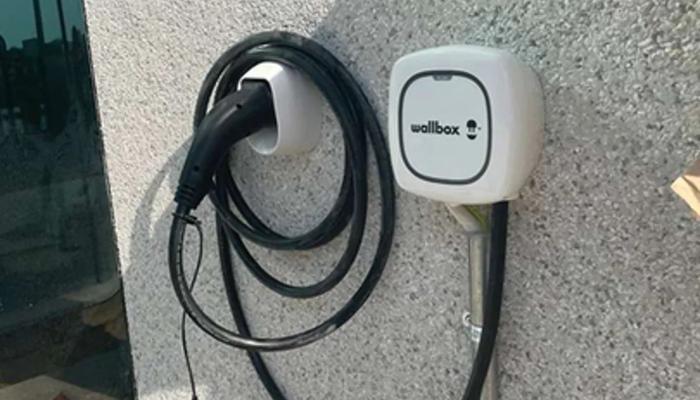
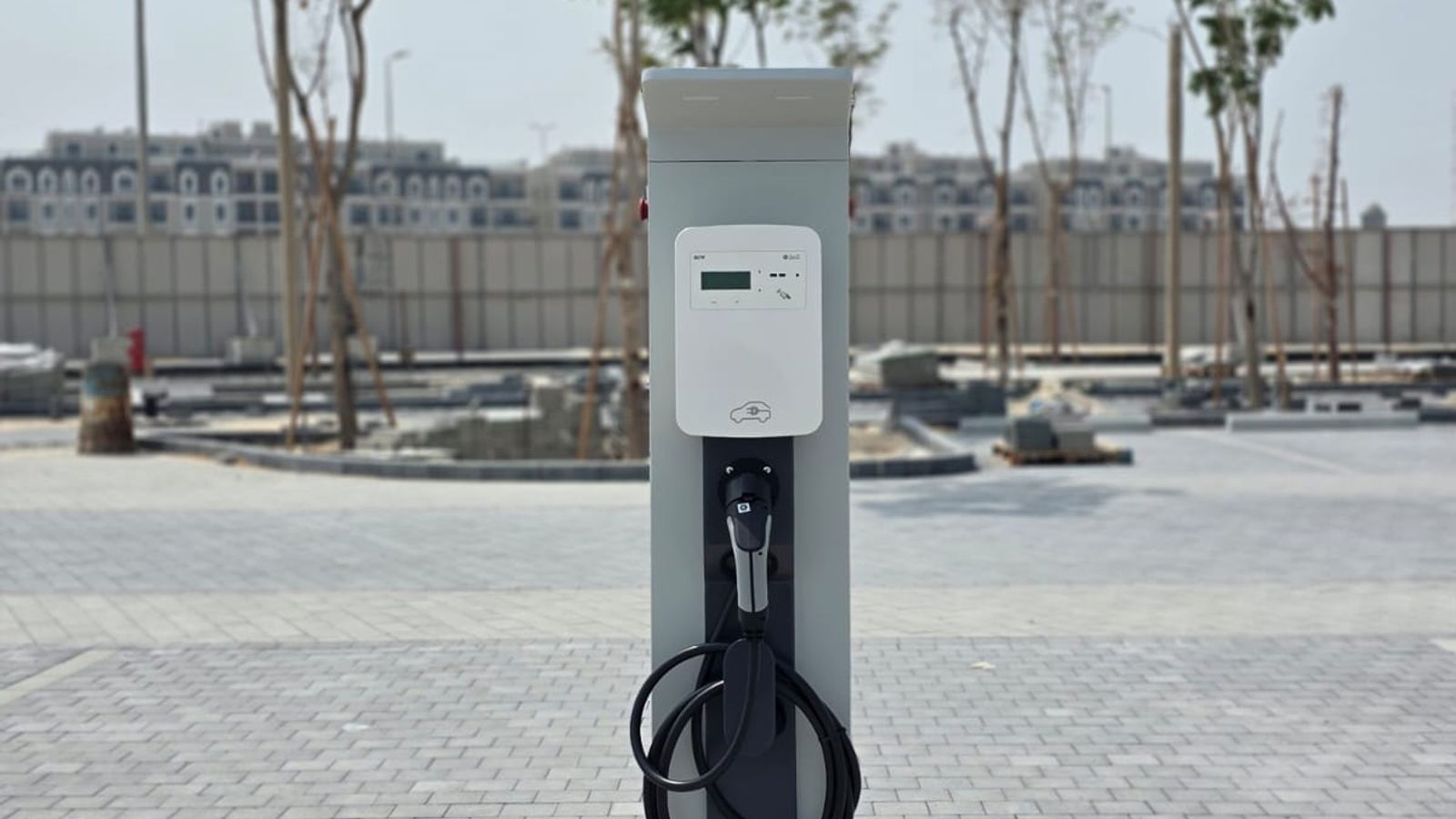
Suitable for malls where customers spend two hours or more. They are relatively low cost and require only simple electrical infrastructure. A large number of them can be installed at a reasonable total cost, making them ideal for the large parking lots found in malls.
DC Fast Chargers (50 to 150 kW)
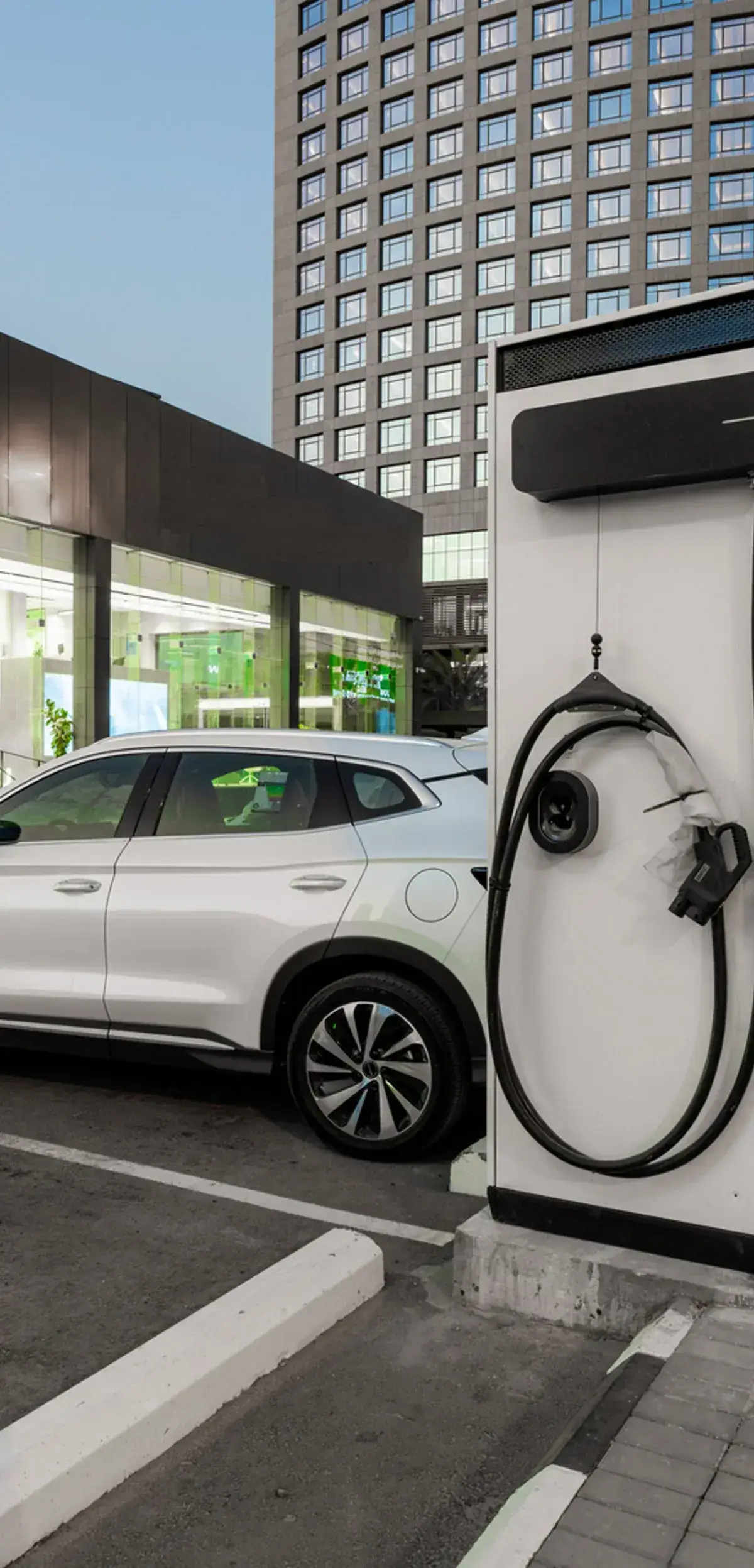
Ideal for customers who need a quick charge during a short visit. They charge a vehicle from 10% to 80% in 30 to 45 minutes. They cost more but attract a wider range of users and generate higher revenue per session.
Ultra-Fast DC Chargers (150 to 360 kW)
These are the optimal choice for malls located on or near highways. They charge a vehicle in just 15 to 25 minutes. They require robust electrical infrastructure and dedicated transformers, but they generate the highest revenue and attract long-distance travelers.
Our recommendation: The ideal mix for a large commercial mall is to install 6 to 10 AC chargers at 22 kW for charging while shopping, in addition to 2 to 4 DC fast chargers at 60 to 120 kW for customers who need an urgent charge. This combination serves every usage pattern and delivers the maximum possible return.
Return on Investment (ROI) Analysis
Let's calculate the ROI for a commercial mall installing 8 AC chargers at 22 kW and 2 DC chargers at 60 kW:
Installation Costs (Initial Investment)
- 8 AC chargers x 6,000 SAR = 48,000 SAR
- 2 DC chargers x 120,000 SAR = 240,000 SAR
- Electrical wiring and installation = 60,000 SAR (approximately)
- Total Investment: 348,000 SAR
Expected Monthly Revenue
- AC chargers: 8 chargers x 4 sessions per day x 15 kWh x 0.80 SAR x 30 days = 11,520 SAR
- DC chargers: 2 chargers x 6 sessions per day x 30 kWh x 1.20 SAR x 30 days = 12,960 SAR
- Total Monthly Revenue: 24,480 SAR
Monthly Operating Costs
- Electricity cost (at the commercial tariff of 0.32 SAR): approximately 6,300 SAR
- Maintenance and operation: approximately 2,000 SAR
- Total Monthly Costs: 8,300 SAR
Net Monthly Profit
24,480 - 8,300 = 16,180 SAR per month
Payback period: 348,000 / 16,180 = approximately 21.5 months (less than two years). This is an excellent return, and it does not even account for the indirect revenue generated from increased customer spending inside the mall.
Steps for Installing Charging Stations in Commercial Malls
The installation process with a specialized company such as Climatech Charger proceeds through the following phases:
- Feasibility study and initial assessment: This includes analyzing mall traffic, the share of EVs, the available electrical capacity, and identifying optimal charger locations within the parking area.
- Engineering design: Preparing the electrical and structural drawings, determining the types and number of chargers, and calculating the required electrical loads.
- Obtaining permits: Submitting applications for the required permits from the relevant authorities, including the electricity company and the municipality.
- Preparing the infrastructure: Running the main electrical cables, installing transformers if needed, and preparing the charger bases and flooring.
- Charger installation: Mounting the chargers and connecting them to the electrical grid, along with installing remote management and monitoring systems.
- Testing and commissioning: Running comprehensive tests on every charger, integrating electronic payment systems, and training the operations team.
- Launch and marketing: Announcing the new charging service through the appropriate marketing channels to attract EV owners.
Successful Case Studies in Saudi Arabia
Several organizations in the Kingdom have begun installing charging stations at their commercial sites and have achieved tangible positive results:
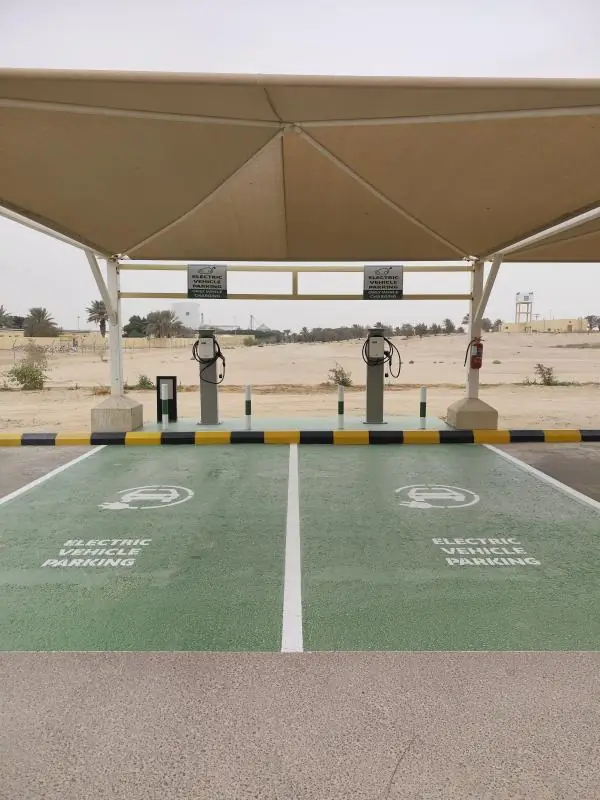
- Major commercial malls in Riyadh and Jeddah: These have begun designating parking bays equipped with AC and DC chargers and have observed an increase in visits from EV owners along with a rise in average dwell time.
- Luxury hotel chains: They have added chargers to guest parking as a premium service, which has boosted guest satisfaction and ratings.
- Hospitals and healthcare facilities: They have installed chargers for staff and visitors, contributing to a better work environment and helping attract top talent.
- Banks and financial institutions: They have installed chargers at their main branches as part of corporate sustainability initiatives and premium customer service.
Government Incentives for Commercial Charging Stations
The Saudi government supports the shift to electric vehicles through several initiatives and incentives:
- Streamlined permitting: Simplifying the procedures for obtaining permits to install charging stations at commercial sites.
- Electric vehicle infrastructure strategy: The Kingdom is targeting the installation of thousands of charging stations across the country by 2030, while encouraging private sector participation.
- New building requirements: New regulations are moving toward requiring new commercial real estate projects to dedicate a share of their parking to EV charging.
- Renewable energy support: Charging stations can be linked to solar power systems to reduce operating costs and benefit from renewable energy support programs.
Looking ahead: Commercial malls that invest in charging stations today position themselves in a strong competitive spot. As the number of EVs continues to grow steadily, charging stations will shift from being a competitive edge to an essential requirement for every successful commercial mall.
Choosing the Right Partner for Installation and Operation
The success of a charging station project depends heavily on choosing the right technical partner. When comparing installation companies, make sure the following criteria are in place:
- Experience with commercial projects: Working with commercial malls differs from residential installation in terms of high electrical loads, multiple chargers, and the required management systems.
- End-to-end solutions: Covering everything from study and design to installation, operation, and routine maintenance.
- Ongoing technical support: Commercial charging stations need a rapid response whenever a fault occurs to avoid lost revenue.
- Smart management systems: Software for monitoring usage, handling billing, and tracking performance remotely.
- Chargers with varied capacities: The ability to supply AC and DC chargers ranging from 7 kW to 360 kW to meet every requirement.
Need help choosing the right charger?
The Climatech Charger team specializes in installing commercial charging stations across Saudi Arabia. We offer a complimentary feasibility study and comprehensive engineering design backed by a full warranty and after-sales service.